Digital Inclusion & Exclusion In India : Challenges & Implications Of Digital Divide
On April 12, 2023, Twitter CEO Elon Musk announced that all legacy Twitter blue ticks would be removed and this did happen as Twitter removed all legacy blue ticks on April 20th, a date famously termed 4/20 by the Twitter CEO. Twitter rolled down the legacy verification program and announced that accounts verified under the previous criteria will only retain a blue checkmark if they are subscribed to Twitter Blue, a premium subscription. You can't skip advertisements for long on YouTube if you are not subscribed to its premium mode. The same goes for other digital media apps and platforms.
This is not the first time any digital media platform has offered a premium subscription to its users for an additional service. It is one of their revenue models. It allows users to avail some additional features of the service but what about those who don't subscribe? Well, this digital discrimination has given rise to a term called Digital dalit. Digital Dalits can be termed as users who are deprived of internet services, but is it only limited to mere subscriptions to Twitter or YouTube? Certainly not!
India has the 2nd largest digital population in the world after China. India accounts for 1.05 billion internet users, almost thrice the digital population of The United States. The government of India's Digital India initiative resulted in the country’s growing digital population. The arrival of Reliance Jio services in 2017, with its attractive and affordable schemes and subsidies, empowered people from all income levels and socio-economic classes to have access to the Internet.
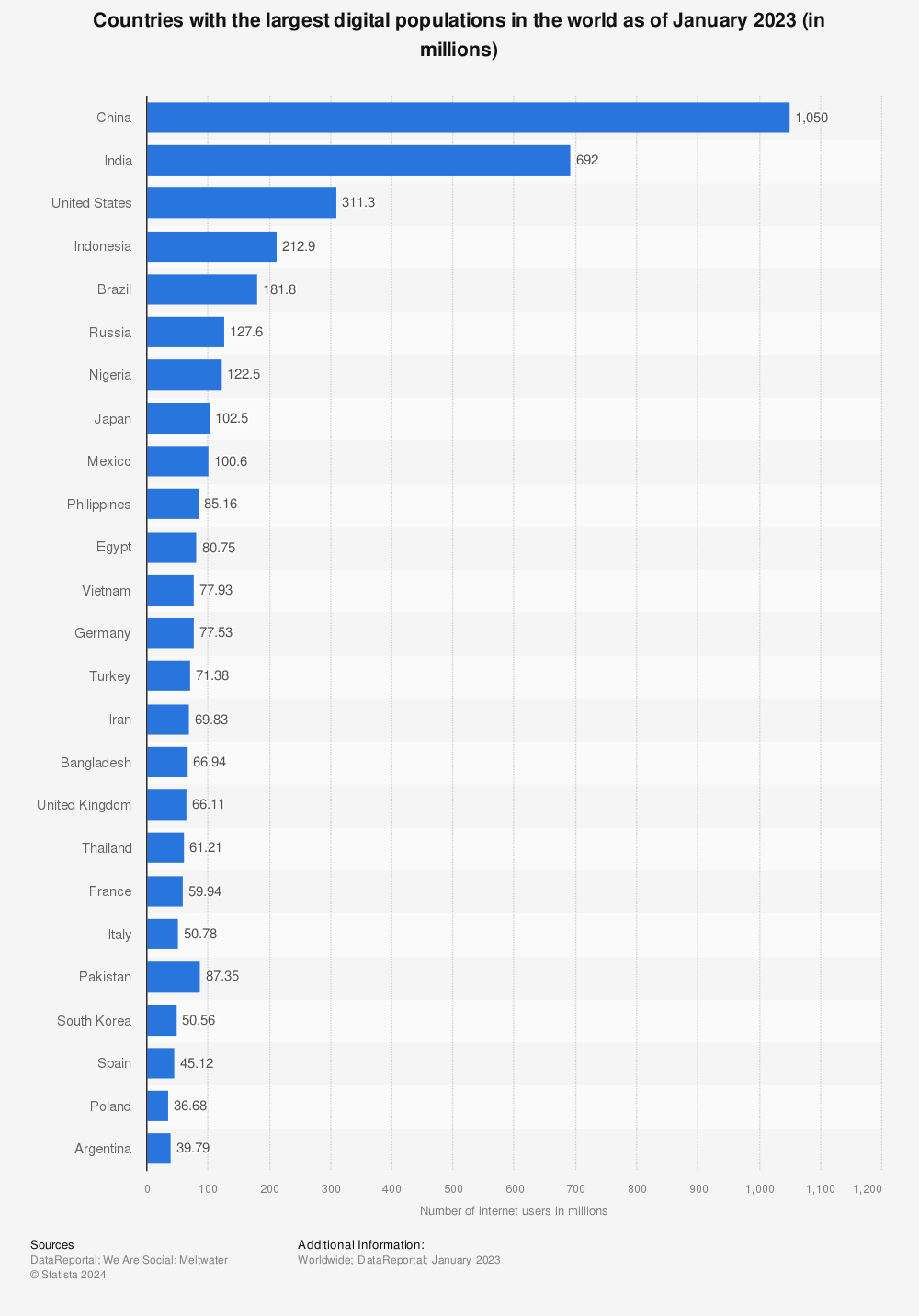
source : Statista
but interestingly, India has the largest offline population worldwide, accounting for over 683 million people without an internet connection. The gap is almost double when compared to second-ranked China which has around 336 million offline population. India also ranks low in the internet usage index across countries

Source : Statista
India has the largest online as well as offline population and this digital divide extends beyond mere access to technology. This digital divide is deeply rooted in inequality in digital literacy, skill development, and access to relevant resources. Socioeconomic factors, such as income levels, education, and geographical location, are pivotal in widening this gap further. These factors hinder individuals from acquiring digital skills and also limit their ability to use existing technology for personal and professional growth.
In this new digital age, Indians welcomed digital technology with open arms & it is now an integral part of their lives but yet, but India is to use its full potential and the problem lies within many factors such as :
Economic Barriers
Many internet users in India leverage internet services using smartphones. Most of the people in India have low purchasing power and face financial limitations. It prevents them from owning digital devices. The cost of data plans makes access to the internet irregular. This is a significant barrier to entry into the digital world.
Infrastructure Limitations
Despite the efforts of the Government of India through various schemes, the existing infrastructure is the limiting factor in technological advancement in rural India. Poor internet connectivity and inconsistent and inadequate power supply make it difficult for the integration of digital technology into daily life.
Language and Content Relevance
Certain segments of the Indian population don't understand technological interfaces and digital content in standardized languages like English. This language barrier keeps it away from using digital tech. Additionally, the lack of region-specific content limits the relatability and relevance of digital platforms to local communities.
A society is a big playground. But for some it's plain and even & for some it's unfair & uneven. The social divide within Indian society plays a major role in widening the gap between the privileged and the marginalized. A digital connection with the outer world seems unachievable for those sections of society that are still deprived of basic needs like health and education.
The economic status of the person determines the quality of life of that person. It eventually determines the access to the resources. The lack of economic stability leads to low internet usage and very little digital skills. It's like a race where some runners have fancy shoes, but others have to run barefoot. Similarly, in today's job race, having digital skills is like having fancy shoes. Many jobs now need these skills. So, being left without digital access feels like running barefoot in the job race. This economic barrier hinders access to the internet. In 2022, India ranked 87 out of 120 countries. Internet usage index involved measuring the digital population, Gender gap in the digital population. The number of internet connections in urban areas is higher than the connections in rural regions, clearly indicating the usage gap.
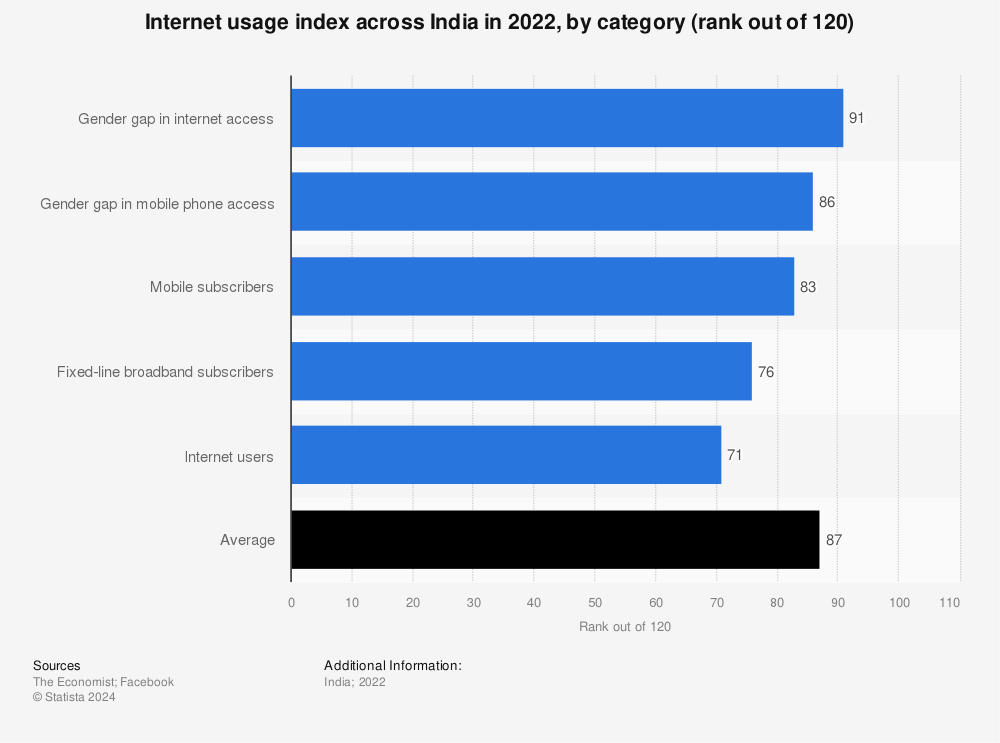
Source : Statista
Thus, the digital divide in India extends beyond mere access to technology. It consists of disparities in digital literacy, skill development, and access to relevant resources. Socioeconomic factors, such as income levels, education, and geographical location, are pivotal in widening this gap.
Despite low internet prices, internet usage in India has yet to reach its full potential. Lack of awareness, infrastructure gender gap, and economic & social constraints eventually promote digital exclusion and hinder the growth of the nation. Affordable mobile handsets and cheap mobile internet connections are only a partial solution. This digital gap can be bridged by implementing widespread digital literacy programs specially designed for different demographics, especially rural populations and economically disadvantaged groups. It can empower people with the necessary skills to stay connected with the digital world. Also Investing in the expansion of internet infrastructure in remote and rural areas is essential for easy digital connectivity which will help to reduce the urban-rural digital divide. extensive creation of region-specific digital content and applications, both Government & private can add to the cultural relevance and engagement. It will make technology more accessible and beneficial for all communities.
The future of digital inclusion in India relies on collaborative efforts, adequate investment in infrastructure, and proactive policy at the Government level. By addressing these challenges of the digital divide, India can pave the way for a more inclusive and equitable digital ecosystem.
- Mansoor Alamgir Mulla
Roll No. 15 (PGDDM)


Comments
Post a Comment